
UPI's Global Expansion: A New Era of Cross-Border Transactions

UPI's Global Expansion: A New Era of Cross-Border Transactions

India’s UPI, or Unified Payments Interface, is now expanding its reach beyond borders. This month, Indians can use UPI to buy tickets to visit the Eiffel Tower in Paris. This marks the beginning of UPI’s international journey.

Indians can now transact using UPI at nearly 3 million merchants across seven Asian countries. Additionally, they can also send money from the UAE and Singapore, which together accounted for a quarter of the $125 billion remitted to India in 2023.

The numbers are small compared to local transactions, but they are expected to grow rapidly. UPI has seen tremendous growth domestically, from 920 million transactions in 2017-18 to 84 billion in 2022-23. The target is 1 billion transactions per day by 2026-27.

This global expansion of UPI was first recommended by a committee led by Nandan Nilekani. The aim is to facilitate real-time, low-cost cross-border transactions and promote India’s digital finance architecture in countries with trade, travel, and diaspora connections.

While progress is visible, there are challenges ahead. Merchant visibility and transaction costs need to be addressed. UPI’s leaner model has the potential to reduce transfer fees, but lowering foreign exchange conversion costs remains a challenge.

Raising transaction value limits and resolving cross-border payment disputes are among the hurdles UPI must overcome to scale up its global presence.

As NPCI looks to expand UPI to more countries, other nations are also advancing their payment systems. However, UPI’s open architecture and interoperability give it an advantage over many private wallets dominating other markets.

While full adoption may be challenging, NPCI’s success could pave the way for exporting India’s digital infrastructure to other countries, enhancing India’s economic and diplomatic influence on the global stage.


Related Articles


Bespoke Investment Services,
Portfolio Design and Execution

Portfolio Design

My portfolio design services acts as a bridge between strategic allocation theory and real-world implementation. It brings flexibility in scope (asset class level or full SAA), a collaborative working style, and the advantage of ongoing specialist input.

Strategic Practical Collaborative

Global Overview

My portfolio solutions services help investors design portfolios tailored to their specific circumstances and objectives.

The approach combines quantitative and qualitative methods with implementation planning.

Investors are supported by associate strategists and asset class specialists at every stage.

Focus Area What You Get
Tailored Objectives Portfolio design aligned to specific funding goals, risk tolerance, and constraints.
Blended Methods Quantitative modelling plus qualitative judgement for robust, real-world decisions.
Specialist Support Associate strategists and asset class specialists embedded through the process.

From Theory to Practice

Strategic Asset Allocation (SAA) is essential but often leaves a gap between theory and real-world results.

My portfolio design advisory services aim to bridge this implementation gap.

Investors use these services in two main ways:

  • Asset class/sub-group level (e.g., Equities, Growth Portfolio, Absolute Return Portfolio), often tied to manager selection.
  • Granular portfolio design with SAA review, aligning top-level allocation with detailed structuring.
Mode Best For Outcome
Asset Class Level Refining a specific sleeve such as Equities or Absolute Return. Clear mandate design and manager selection alignment.
Granular + SAA Review Top-down to bottom-up consistency across the whole portfolio. Integrated structure that links strategic targets to implementable building blocks.

Working with Clients

Services act as an extension of the client’s team.

Recommended working group format:

  • I provide structure and analysis.
  • Client maintains control of the decision-making process.

I recognise that implementation varies by asset class and evolves over time.

Step Your Role My Role
Define Objectives Set targets, constraints, and timelines. Translate into measurable design criteria.
Design & Analysis Provide input and preferences. Structure, model, and stress-test options.
Implementation Approve direction and pace. Plan for managers, mandates, and execution.

Latest Market Musings

  • All
  • Markets
  • Stocks
  • Cryptocurrency News

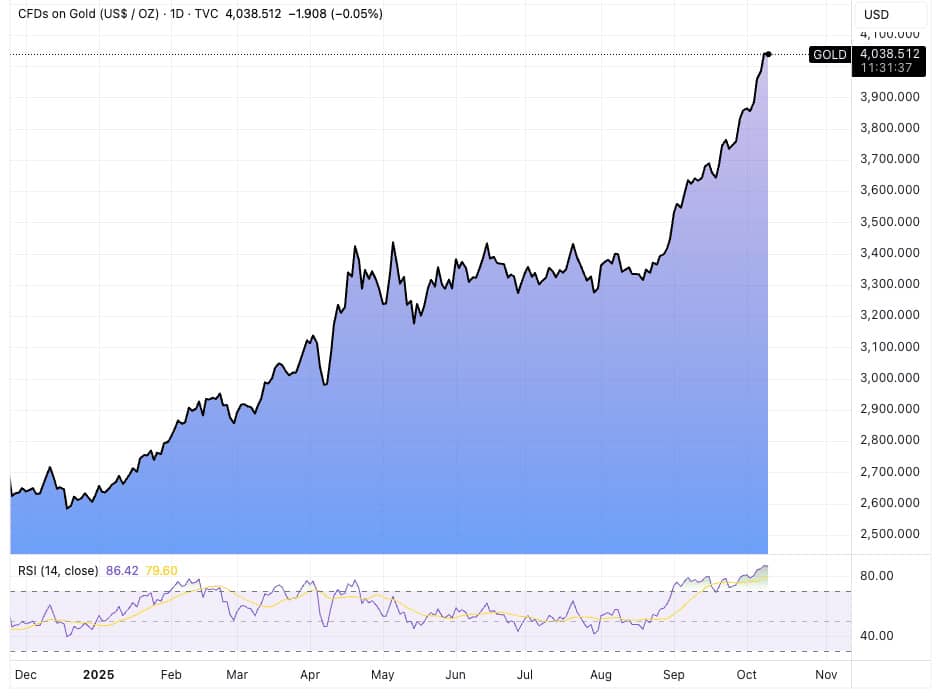
  Gold often features in my portfolio considerations, but the key question now is whether I’ll be adding to that exposure at these levels.

Every year I make a point of looking at UBS’s Global Real Estate Bubble Index. Real estate isn’t a sector I invest in directly — it’s not my special...

 The past six months have been all about US tech. The S&P 500 has soared to record highs since April, up more than 12% this year, with AI-d...

  I want to flag something that's bugging me, because I'm seeing a pattern emerge; one that looks eerily familiar if you were around in the dot-...

Equity Strategy & Implementation

For family funds & charitable trusts

Research-led equity allocations that blend manager research, ESG integration and practical portfolio design—turning analysis into decisions you can implement tomorrow.

  • Comprehensive coverage: global, style and thematic sleeves.
  • Actionable design: mandates, fees and execution mapped out.
  • Ongoing oversight: monitoring with clear trigger points.

ETF Strategy & Services

For families, individuals & trusts

Diversified, cost-aware portfolios using Exchange Traded Funds—clear design, disciplined selection and practical execution to enhance efficiency without sacrificing oversight.

  • Efficient diversification: broad market, factor and thematic exposure.
  • Selection discipline: fees, liquidity, tracking and structure assessed.
  • Ongoing oversight: rebalancing, reporting and governance clarity.

Crypto & Digital Asset Strategy

For family funds & charitable trusts

Responsible exposure to digital assets, combining portfolio design, manager research, risk-based controls and trustee-grade governance—so you can diversify without compromising oversight.

  • Measured diversification: allocations that complement existing portfolios.
  • Implementation-ready: providers, custody and phasing mapped out.
  • Governance first: clear policy, documentation and monitoring.