One recommendation is to amend the ICS Zimbabwe to further develop the concept of Zimbabwe as a growth hub for Southern Africa. The ICS Zimbabwe refers to Zimbabwe as a “potential growth hub for southern Africa,” but it does not show why this outcome would be important to Washington. Zimbabwe is currently ranked 160 out of 171 countries on DHL’s Global Connectedness Index 2022, placing it below its neighbors and impoverished Sub-Saharan African countries.
Network theorists and the World Bank define hubs as interconnected nodes, while economic growth refers to the increase in the value of goods and services over time. The US Embassy Harare should borrow these concepts to conceptualize the “growth hub for southern Africa” as an SADC member state that is highly interconnected with other SADC member states through linkages that drive positive change in output or real expenditure or income of their populations.
The ICS Zimbabwe should provide a detailed explanation of the conditions for Zimbabwe to become a growth hub for Southern Africa, considering its strong relationships with major-power competitors and China’s expansion of influence. The Zimbabwean economy is currently dominated by a select few, including the president, his family, military officials, and a select group of ruling party and private sector actors.
Zimbabwe’s transformation into a Southern Africa growth hub could boost local job creation, economic development, citizen empowerment, gender equality, climate-smart solutions, and improved labor and environmental standards. However, it is crucial to identify the conditions under which the transformation would support the administration’s policy of focusing on transnational aspects of corruption. The transformation of Zimbabwe into a regional growth hub could potentially fuel the spread of corruption and widen existing inequities.
The US Embassy Harare should partner with the Zimbabwean government to develop a strategic roadmap for transforming Zimbabwe into a growth hub for Southern Africa, advancing US national security and foreign policy interests while promoting economic prosperity and opportunity in Southern Africa. This roadmap should clearly describe resources, activities, outputs, short-term objectives, and long-term goals to advance a shared vision of a better, more sustainable, healthier, and more prosperous future through Zimbabwe’s transformation.
The State Department should implement risk management strategies to transform Zimbabwe into a Southern African growth hub aligned with US national security and foreign policy interests. The transformation would be a long-term, resource-intensive endeavor that would require political and budgetary support over a period likely exceeding the life span of a single ICS. To secure congressional support, the State Department should involve relevant committees in the early planning stages.
Congress is likely to be open to innovative partnerships with Zimbabwe, given its large deposits of rare earth metals used in electronics, batteries, and magnets. However, they may be sensitive to the costs and risks associated with a government hostile to US interests. The State Department should involve relevant committees in the planning process to ensure a robust pursuit of this policy goal.


Unlocking Prosperity: Southern Africa's Emerging Economic Dynamo
The Integrated Country Strategy for Zimbabwe (ICS Zimbabwe) highlights Zimbabwe’s strategic importance to the US as a potential growth hub for southern Africa. However, this is a surprising conclusion given Zimbabwe’s current ranking near the bottom of the DHL Global Connectedness Index. The ICS Zimbabwe fails to provide any explanation for why Zimbabwe could become a growth hub or why this would be in the US government’s national interest.


Portfolio Design
My portfolio design services acts as a bridge between strategic allocation theory and real-world implementation. It brings flexibility in scope (asset class level or full SAA), a collaborative working style, and the advantage of ongoing specialist input.
Strategic
Practical
Collaborative
Global Overview
My portfolio solutions services help investors design portfolios tailored to their specific circumstances and objectives.
The approach combines quantitative and qualitative methods with implementation planning.
Investors are supported by associate strategists and asset class specialists at every stage.
| Focus Area | What You Get |
|---|---|
| Tailored Objectives | Portfolio design aligned to specific funding goals, risk tolerance, and constraints. |
| Blended Methods | Quantitative modelling plus qualitative judgement for robust, real-world decisions. |
| Specialist Support | Associate strategists and asset class specialists embedded through the process. |
From Theory to Practice
Strategic Asset Allocation (SAA) is essential but often leaves a gap between theory and real-world results.
My portfolio design advisory services aim to bridge this implementation gap.
Investors use these services in two main ways:
- Asset class/sub-group level (e.g., Equities, Growth Portfolio, Absolute Return Portfolio), often tied to manager selection.
- Granular portfolio design with SAA review, aligning top-level allocation with detailed structuring.
| Mode | Best For | Outcome |
|---|---|---|
| Asset Class Level | Refining a specific sleeve such as Equities or Absolute Return. | Clear mandate design and manager selection alignment. |
| Granular + SAA Review | Top-down to bottom-up consistency across the whole portfolio. | Integrated structure that links strategic targets to implementable building blocks. |
Working with Clients
Services act as an extension of the client’s team.
Recommended working group format:
- I provide structure and analysis.
- Client maintains control of the decision-making process.
I recognise that implementation varies by asset class and evolves over time.
| Step | Your Role | My Role |
|---|---|---|
| Define Objectives | Set targets, constraints, and timelines. | Translate into measurable design criteria. |
| Design & Analysis | Provide input and preferences. | Structure, model, and stress-test options. |
| Implementation | Approve direction and pace. | Plan for managers, mandates, and execution. |
Latest Market Musings
Gold at $4K - What Next?
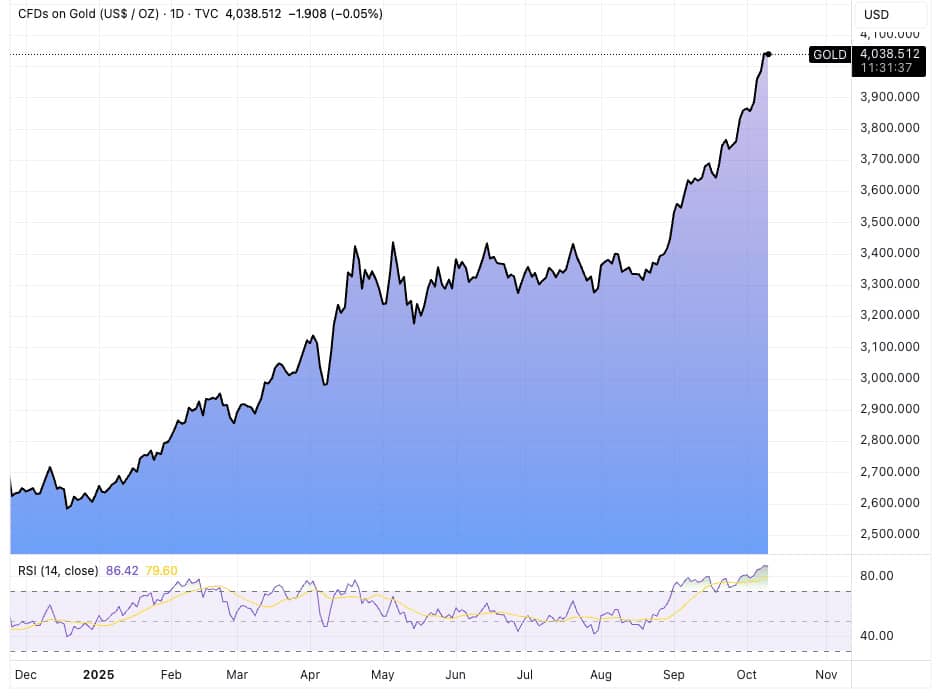
Gold often features in my portfolio considerations, but the key question now is whether I’ll be adding to that exposure at these levels.

Madrid and Dubai Property Bubble Warnings Sounded by UBS
Every year I make a point of looking at UBS’s Global Real Estate Bubble Index. Real estate isn’t a sector I invest in directly — it’s not my special...

Why I'm Looking at Swiss Pharma as This Equity Rally Broadens
The past six months have been all about US tech. The S&P 500 has soared to record highs since April, up more than 12% this year, with AI-d...

SOL Rebranding: Hype Risks Outpacing Business Reality
I want to flag something that's bugging me, because I'm seeing a pattern emerge; one that looks eerily familiar if you were around in the dot-...