From 2020 to 2023, China faced significant development and survival pressures. As China faces 2024, some are concerned and disheartened, while others have hopes and aspirations.
Chinese President Xi Jinping emphasized the importance of delivering a better life for the people, including well-being for children, education, career opportunities, and adequate access to medical services and elderly care. These issues matter to every family and are a top priority for the government.
Researchers believe that these straightforward statements may garner more public approval. They suggest that the top leadership understands the grassroots situation and has pointed out significant gaps in improving people’s livelihood, education, employment, healthcare, and elderly care. Objectively recognizing and acknowledging these problems is the first step to solving problems in China.
China’s economic problems are rooted in past logic and require more than technical macro, industrial, and financial policies to address. The complex and rigid logic leading to these problems makes them difficult to solve and takes longer to resolve. China’s large-scale economy has complex aspects, including industrial, urban-rural, regional, internal and external, virtual and real, state-owned, private, and foreign-invested sectors.
The impact of internal and external factors on various subsystems of the Chinese economy varies, leading to differences in performance during post-pandemic recovery. For example, China’s consumption sector performance in 2023 differed significantly from manufacturing, while state-owned enterprises’ operational performance varied significantly from private and foreign-invested enterprises. Domestic and foreign economic environments also differed, with some sectors recovering while others continued to decline, potentially affecting this year’s economic performance.
China’s economic situation in 2024 is considered favourable if it stabilizes without systemic decline. Development goals should be rational and not overly ambitious, and economic and market laws should not be overlooked due to non-economic factors. China’s economy faces issues in both international and domestic directions, with the latter being more significant.
The concept of “domestic circulation” and “dual circulation of domestic and international” has been emphasized, with China facing international containment and pressure. As a response, China focuses on internal development to expand and deepen the domestic market.
However, rushing into the domestic market intensifies competition and fails to offset international losses. The fundamental solution lies domestically, with effective reforms and breakthroughs boosting market confidence. Without these reforms, improving the relationship between the Chinese economy and the world economy may be difficult.


Understanding the Problems China's Economy Might Face in 2024
China’s economy is in a downturn, with many cities cancelling official countdown events and celebrations. The government is financially constrained and hesitant to take responsibility for many issues, fearing overstepping its bounds.



Portfolio Design
My portfolio design services acts as a bridge between strategic allocation theory and real-world implementation. It brings flexibility in scope (asset class level or full SAA), a collaborative working style, and the advantage of ongoing specialist input.
Strategic
Practical
Collaborative
Global Overview
My portfolio solutions services help investors design portfolios tailored to their specific circumstances and objectives.
The approach combines quantitative and qualitative methods with implementation planning.
Investors are supported by associate strategists and asset class specialists at every stage.
| Focus Area | What You Get |
|---|---|
| Tailored Objectives | Portfolio design aligned to specific funding goals, risk tolerance, and constraints. |
| Blended Methods | Quantitative modelling plus qualitative judgement for robust, real-world decisions. |
| Specialist Support | Associate strategists and asset class specialists embedded through the process. |
From Theory to Practice
Strategic Asset Allocation (SAA) is essential but often leaves a gap between theory and real-world results.
My portfolio design advisory services aim to bridge this implementation gap.
Investors use these services in two main ways:
- Asset class/sub-group level (e.g., Equities, Growth Portfolio, Absolute Return Portfolio), often tied to manager selection.
- Granular portfolio design with SAA review, aligning top-level allocation with detailed structuring.
| Mode | Best For | Outcome |
|---|---|---|
| Asset Class Level | Refining a specific sleeve such as Equities or Absolute Return. | Clear mandate design and manager selection alignment. |
| Granular + SAA Review | Top-down to bottom-up consistency across the whole portfolio. | Integrated structure that links strategic targets to implementable building blocks. |
Working with Clients
Services act as an extension of the client’s team.
Recommended working group format:
- I provide structure and analysis.
- Client maintains control of the decision-making process.
I recognise that implementation varies by asset class and evolves over time.
| Step | Your Role | My Role |
|---|---|---|
| Define Objectives | Set targets, constraints, and timelines. | Translate into measurable design criteria. |
| Design & Analysis | Provide input and preferences. | Structure, model, and stress-test options. |
| Implementation | Approve direction and pace. | Plan for managers, mandates, and execution. |
Latest Market Musings
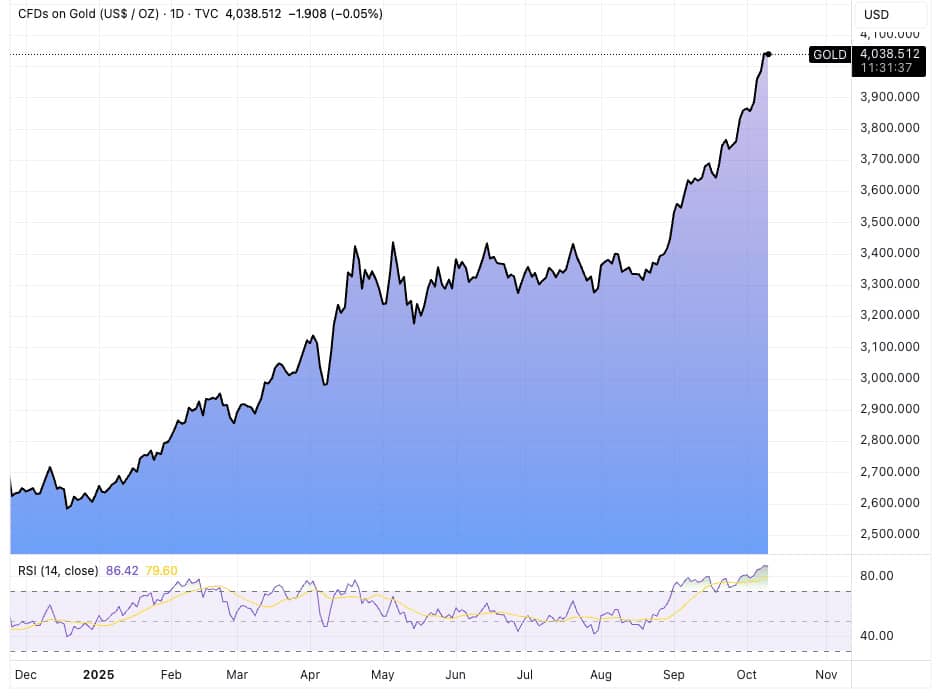
Gold at $4K - What Next?
Gold often features in my portfolio considerations, but the key question now is whether I’ll be adding to that exposure at these levels.

Madrid and Dubai Property Bubble Warnings Sounded by UBS
Every year I make a point of looking at UBS’s Global Real Estate Bubble Index. Real estate isn’t a sector I invest in directly — it’s not my special...

Why I'm Looking at Swiss Pharma as This Equity Rally Broadens
The past six months have been all about US tech. The S&P 500 has soared to record highs since April, up more than 12% this year, with AI-d...

SOL Rebranding: Hype Risks Outpacing Business Reality
I want to flag something that's bugging me, because I'm seeing a pattern emerge; one that looks eerily familiar if you were around in the dot-...