What are greenhouse gases? Imagine your car parked under the scorching sun with all its windows tightly shut. The temperature inside rises higher than outside right? That’s because the suns warmth becomes trapped within. On a scale greenhouse gases function similarly. They act as a layer around our planet capturing heat and maintaining a temperature that is conducive to sustaining life.
The prevalent greenhouse gases include carbon dioxide (CO2) methane (CH4) and nitrous oxide (N2O). While these gases naturally exist in the atmosphere, human activities such as burning fossil fuels, deforestation and industrial processes have escalated their levels significantly. Consequently more heat is retained within our atmosphere resulting in an Earth.


Exploring Europe's Greenhouse Gases: A Simple Guide to Understanding Environmental Impact
Have you ever pondered why some days feel hotter than the ones your grandparents reminisce about?. Why weather patterns seem to be in disarray? Well the explanation may lie above us unseen but impactful; greenhouse gases. In Europe like in parts of the world these gases have become a pressing concern. Lets delve into the reasons behind their significance.


Portfolio Design
My portfolio design services acts as a bridge between strategic allocation theory and real-world implementation. It brings flexibility in scope (asset class level or full SAA), a collaborative working style, and the advantage of ongoing specialist input.
Strategic
Practical
Collaborative
Global Overview
My portfolio solutions services help investors design portfolios tailored to their specific circumstances and objectives.
The approach combines quantitative and qualitative methods with implementation planning.
Investors are supported by associate strategists and asset class specialists at every stage.
| Focus Area | What You Get |
|---|---|
| Tailored Objectives | Portfolio design aligned to specific funding goals, risk tolerance, and constraints. |
| Blended Methods | Quantitative modelling plus qualitative judgement for robust, real-world decisions. |
| Specialist Support | Associate strategists and asset class specialists embedded through the process. |
From Theory to Practice
Strategic Asset Allocation (SAA) is essential but often leaves a gap between theory and real-world results.
My portfolio design advisory services aim to bridge this implementation gap.
Investors use these services in two main ways:
- Asset class/sub-group level (e.g., Equities, Growth Portfolio, Absolute Return Portfolio), often tied to manager selection.
- Granular portfolio design with SAA review, aligning top-level allocation with detailed structuring.
| Mode | Best For | Outcome |
|---|---|---|
| Asset Class Level | Refining a specific sleeve such as Equities or Absolute Return. | Clear mandate design and manager selection alignment. |
| Granular + SAA Review | Top-down to bottom-up consistency across the whole portfolio. | Integrated structure that links strategic targets to implementable building blocks. |
Working with Clients
Services act as an extension of the client’s team.
Recommended working group format:
- I provide structure and analysis.
- Client maintains control of the decision-making process.
I recognise that implementation varies by asset class and evolves over time.
| Step | Your Role | My Role |
|---|---|---|
| Define Objectives | Set targets, constraints, and timelines. | Translate into measurable design criteria. |
| Design & Analysis | Provide input and preferences. | Structure, model, and stress-test options. |
| Implementation | Approve direction and pace. | Plan for managers, mandates, and execution. |
Latest Market Musings
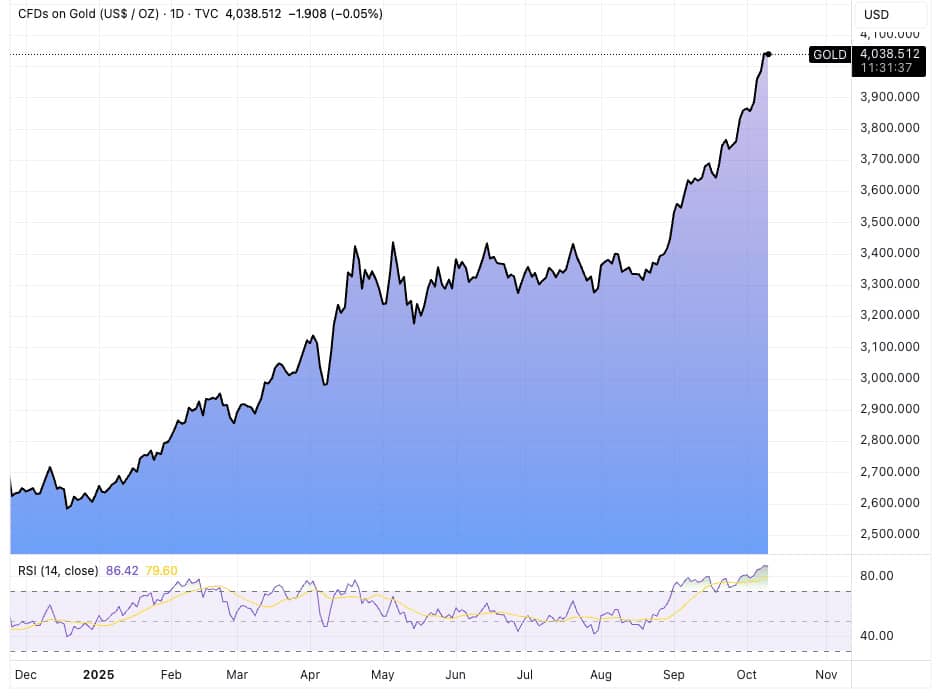
Gold at $4K - What Next?
Gold often features in my portfolio considerations, but the key question now is whether I’ll be adding to that exposure at these levels.

Madrid and Dubai Property Bubble Warnings Sounded by UBS
Every year I make a point of looking at UBS’s Global Real Estate Bubble Index. Real estate isn’t a sector I invest in directly — it’s not my special...

Why I'm Looking at Swiss Pharma as This Equity Rally Broadens
The past six months have been all about US tech. The S&P 500 has soared to record highs since April, up more than 12% this year, with AI-d...

SOL Rebranding: Hype Risks Outpacing Business Reality
I want to flag something that's bugging me, because I'm seeing a pattern emerge; one that looks eerily familiar if you were around in the dot-...